Applications
Aluminum assemblies we coat every season — and the spec that goes with each.
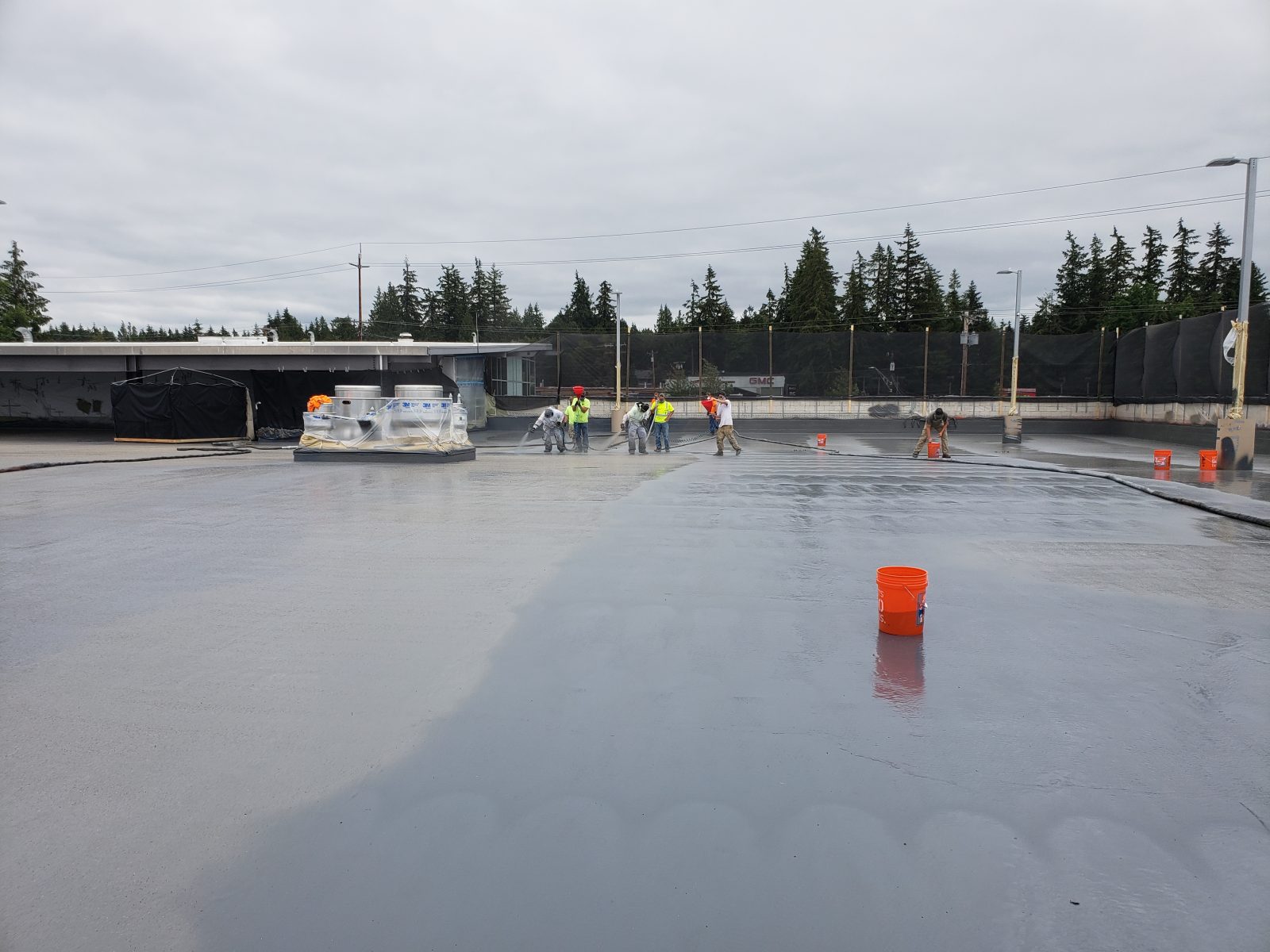
Aluminum Standing Seam
Standing seam was engineered to move — clips let the panel float, and that is the whole point. The trouble starts when someone treats the roof as a fixed surface: a rigid coating, a sealant that has gone hard, or a retrofit penetration that pins a floating panel in place.
A sprayed polyurea membrane does not fight the movement. It bridges the seam, encapsulates the clip and any retrofit fastener, and stretches through the daily cycle. Because the membrane is monolithic there is no lap left to open up, and no sealant joint on the maintenance schedule.
Spec: Degrease and brush-abrade, 7001 Primer full-surface, OR-80SLM at 40–60 mil with an extra stripe pass over seams and clip lines.
Coastal & Marine-Exposure Roofs
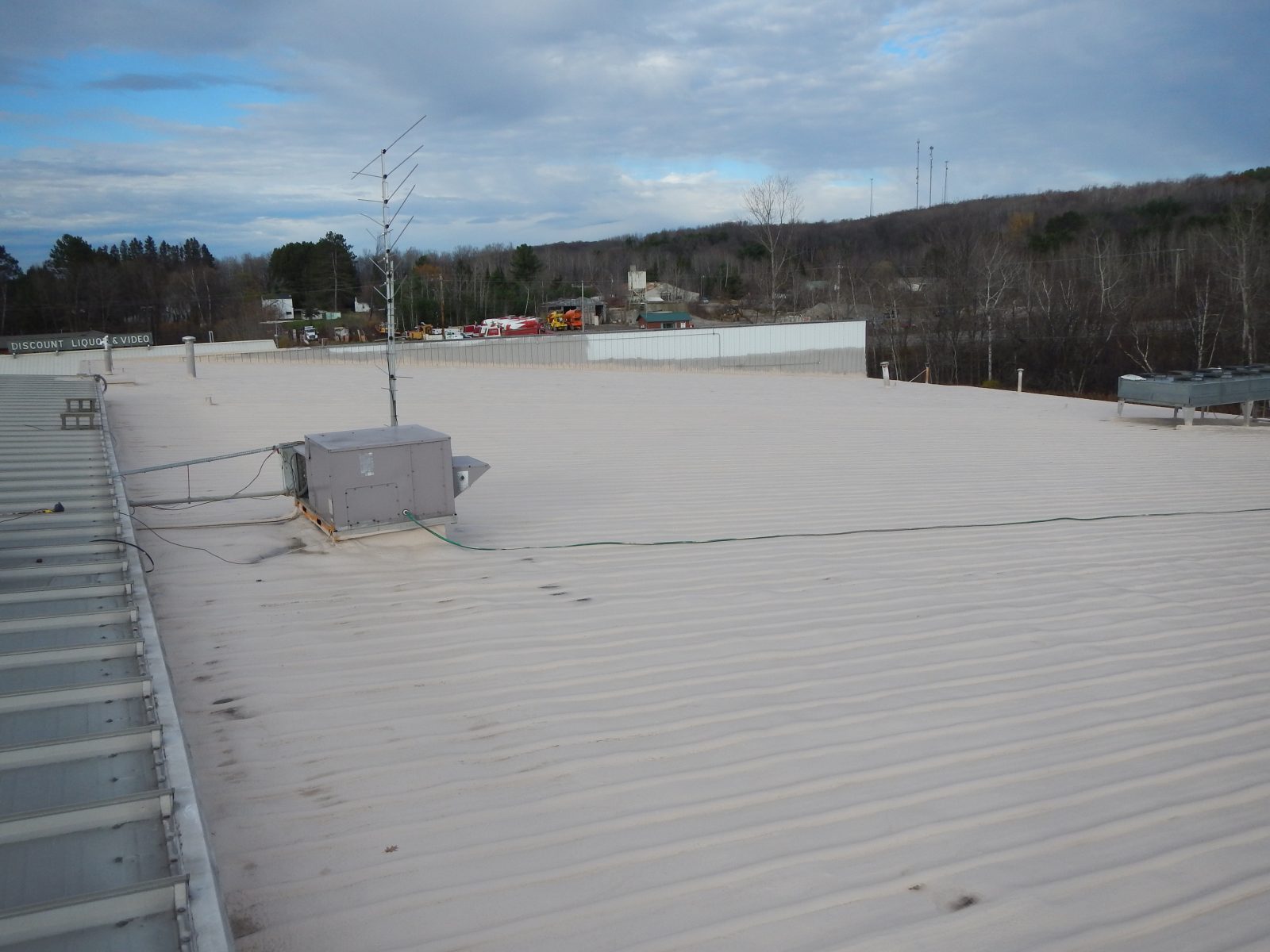
Aluminum is chosen for coastal buildings precisely because it does not rust. What it does instead is pit. Chloride-laden air drives localized pitting corrosion, and pitting concentrates at exactly the places you cannot inspect — under lap joints, around fasteners, behind flashing.
The membrane approach works here because it eliminates the electrolyte path rather than trying to out-last it. No moisture at the metal means no cell, regardless of how much chloride is in the air. The prerequisite is that the salt already on the roof comes off first.
Spec: Pressure-wash and verify chlorides below 7 µg/cm², 7001 Primer, OR-80SLM at 60 mil. Miami-Dade approval on file for high-velocity hurricane zone work.
Mixed-Metal Roofs & Galvanic Details
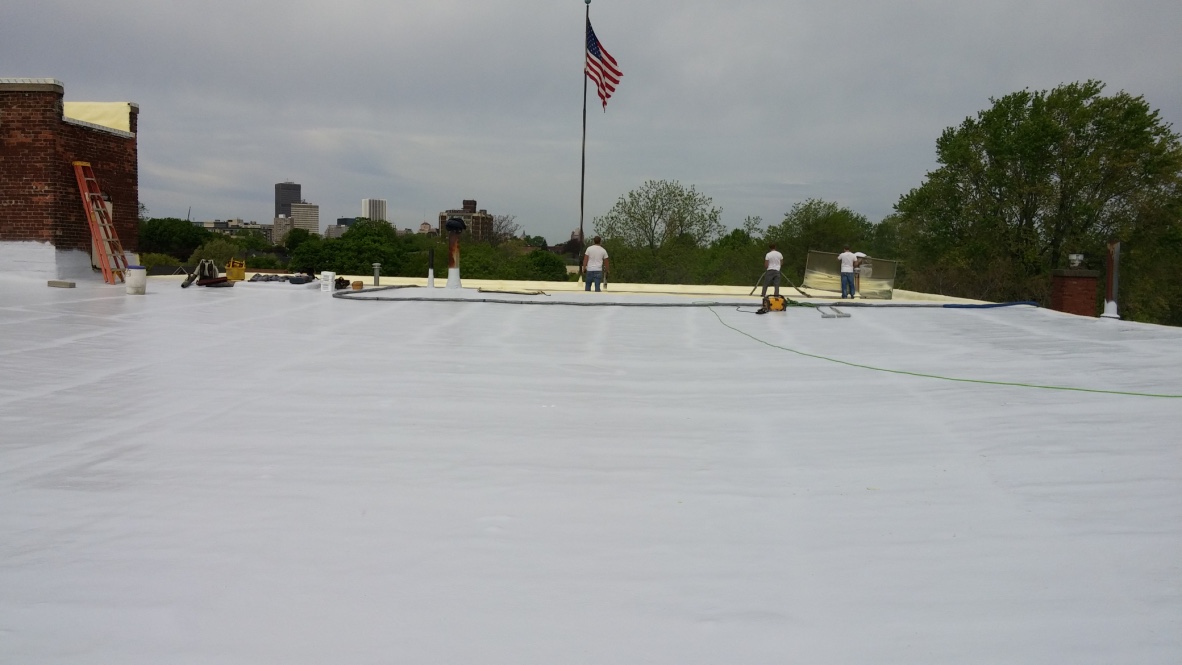
Very few aluminum roofs are only aluminum. Steel purlins, galvanized flashing, stainless fasteners, copper condensate lines, steel equipment curbs — each contact point is a galvanic couple with the aluminum as the sacrificial half.
Coating the field of the roof and stopping short of these details misses the point entirely, because the details are where the metal loss is happening. The membrane has to run continuously across the junction so there is no path for an electrolyte to complete the circuit.
Spec: 7001 Primer on both metals, OR7K at 60–80 mil on curbs, penetrations, and transitions, tied into the OR-80SLM field membrane while it is still in the 6-hour recoat window.
Low-Slope Aluminum Industrial Decks
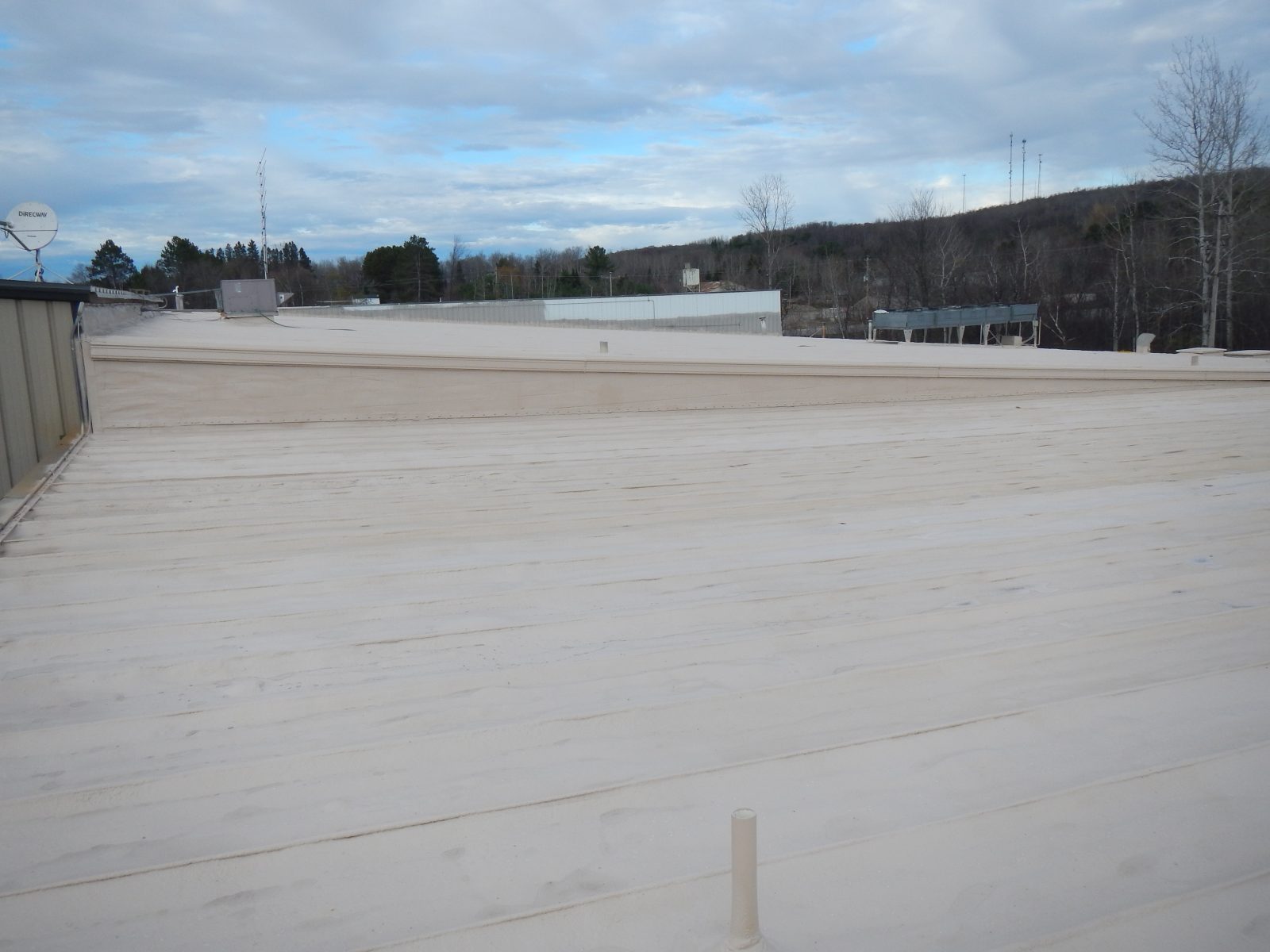
Wide-span aluminum decks on manufacturing and cold-storage buildings pond water, sweat on the underside, and lose conditioned air straight through the fastener line. Recoating alone addresses the water but not the energy or the ponding.
Closed-cell spray foam applied over the prepared deck adds R-value across the entire plane with no thermal bridging, and can be tapered in the field to break up the low spots. OR-80SLM then goes over the foam as the UV and impact layer — the foam cannot be left bare.
Spec: 1.5–2" closed-cell foam over primed deck, OR-80SLM at 60 mil minimum over foam, FJ1 at 80–100 mil in service walkways and around rooftop units.
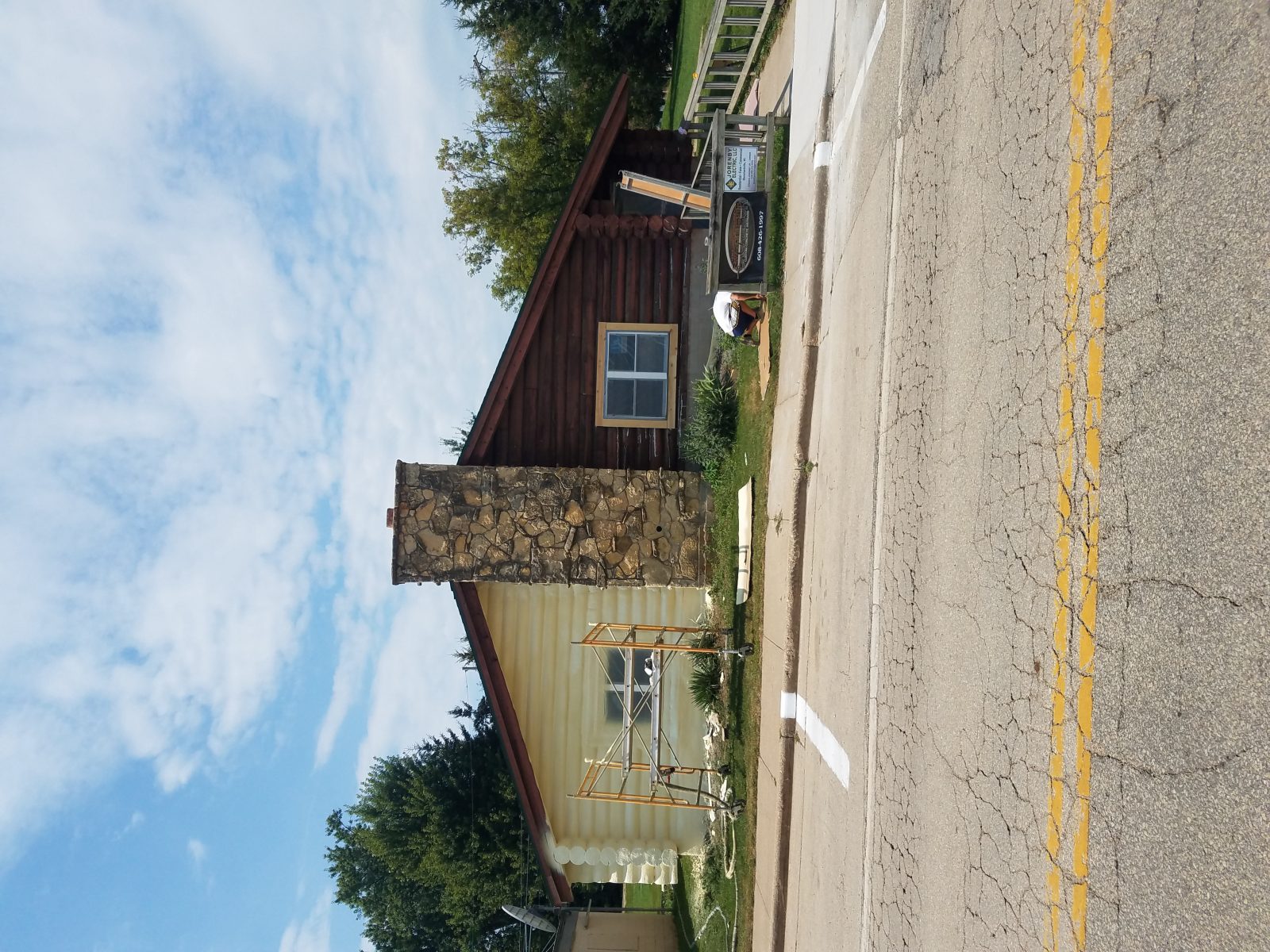
Aluminum RV, Trailer & Mobile Home Roofs
The classic aluminum residential and recreational roof leaks at the seams, the vent flanges, and the front-to-back joint — never in the middle of the sheet. Most have been coated with fibered aluminum asphalt several times over, and each recoat is thinner and more brittle than the one under it.
Polyurea ends the recoat cycle. It handles the extreme flex a road-going or wind-loaded panel sees, and 7001 Primer is what allows it to go over the old aluminized layers without bleed-through or solvent lift.
Spec: Clean, remove all loose coating, 7001 Primer over the sound remainder, OR-80SLM at 40–60 mil with a stripe pass at every seam and flange. Alasta Seal is the alternative where a lighter, hand-applied flexible membrane suits the unit better.
Also Regularly Specified For
- Aluminum awnings, canopies, and patio covers — seams and fastener lines sealed, reflectivity restored
- Aluminum gutter troughs and box gutters — the joint that always leaks, made monolithic
- Failed aluminized asphalt coatings — 7001 Primer over the sound remainder instead of a full strip
- Aluminum-clad parapets and fascia — where wall meets roof and both are moving
- Marina, dock, and boathouse roofs — continuous chloride exposure
- Aluminum equipment enclosures and rooftop screens
- Aluminum-over-steel purlin agricultural buildings — the galvanic case at building scale
- Retrofit penetrations in existing aluminum roofs — curbs, solar standoffs, new HVAC
Not Sure If Your Roof Is Aluminum or Steel?
A magnet settles it in two seconds — and it changes the entire prep and primer spec. Tell us what you find, send a photo of the fasteners, and we will write the spec around it.
Ask an ApplicatorRequest Contractor Pricing & Specs
Tell us about your project and we will follow up with product details, technical data sheets, and pricing.